
Behind The Art
Inspired by Sophie Maxwell, a community leader, advocate, and visionary whose dedication helped shape the future of the Power Station.
These pieces honor her lasting impact and the spirit of progress she inspired.
Future Heirlooms
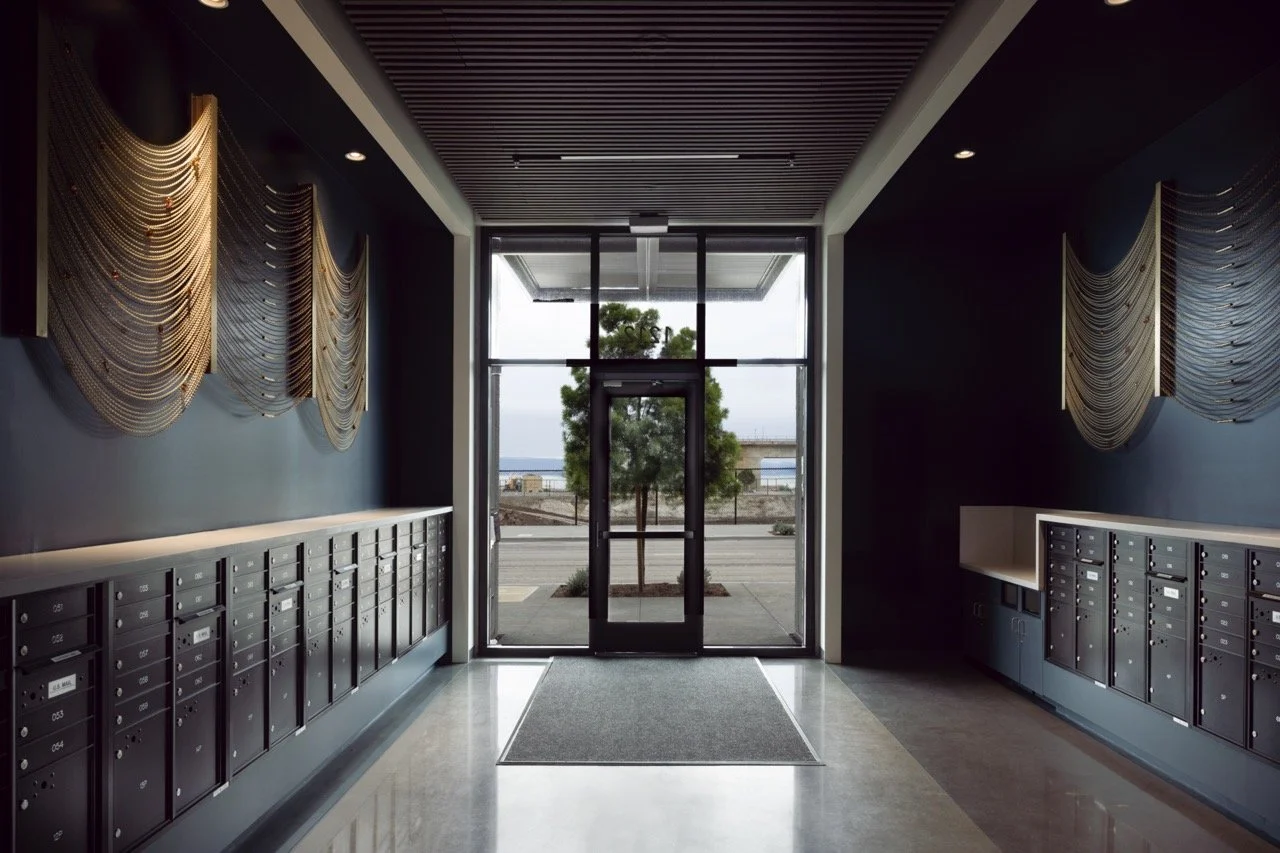
Image Credit: Kerim Harmanci
Future Heirlooms is a celebration of lineage — of family. Future Heirlooms honors Sophie Maxwell’s legacy and the three generations of San Francisco stewardship, community care, advocacy, and soft power that she and her family embody. Inspired by Sophie’s impeccable personal style — a form of communication unique to her — this work translates adornment into architecture. It communicates the softness and delicacy of power.
Crafted from brass, steel, chain and stone, the installation draws from feminine ornamentation to express strength that is neither loud nor domineering. Its draped forms evoke necklaces passed between mothers, daughters, and granddaughters: treasures that hold stories as much as value. Here, those gestures are scaled and multiplied, transforming intimate objects into symbols of communal resilience.
Suspended in graceful arcs, the chains suggest movement and continuity — the way leadership can be inherited, reshaped, and carried forward. Light reflects softly on the metal, introducing a sense of ephemerality: a reminder that power can be delicate and still enduring.
The reflecting brass and steel sculptures are intentionally placed directly at the lobby’s entrance. It asks viewers to notice the beauty and soft power in stewardship and to recognize that the most enduring monuments are the ones we create together — through service, legacy, and love.
Power in Community
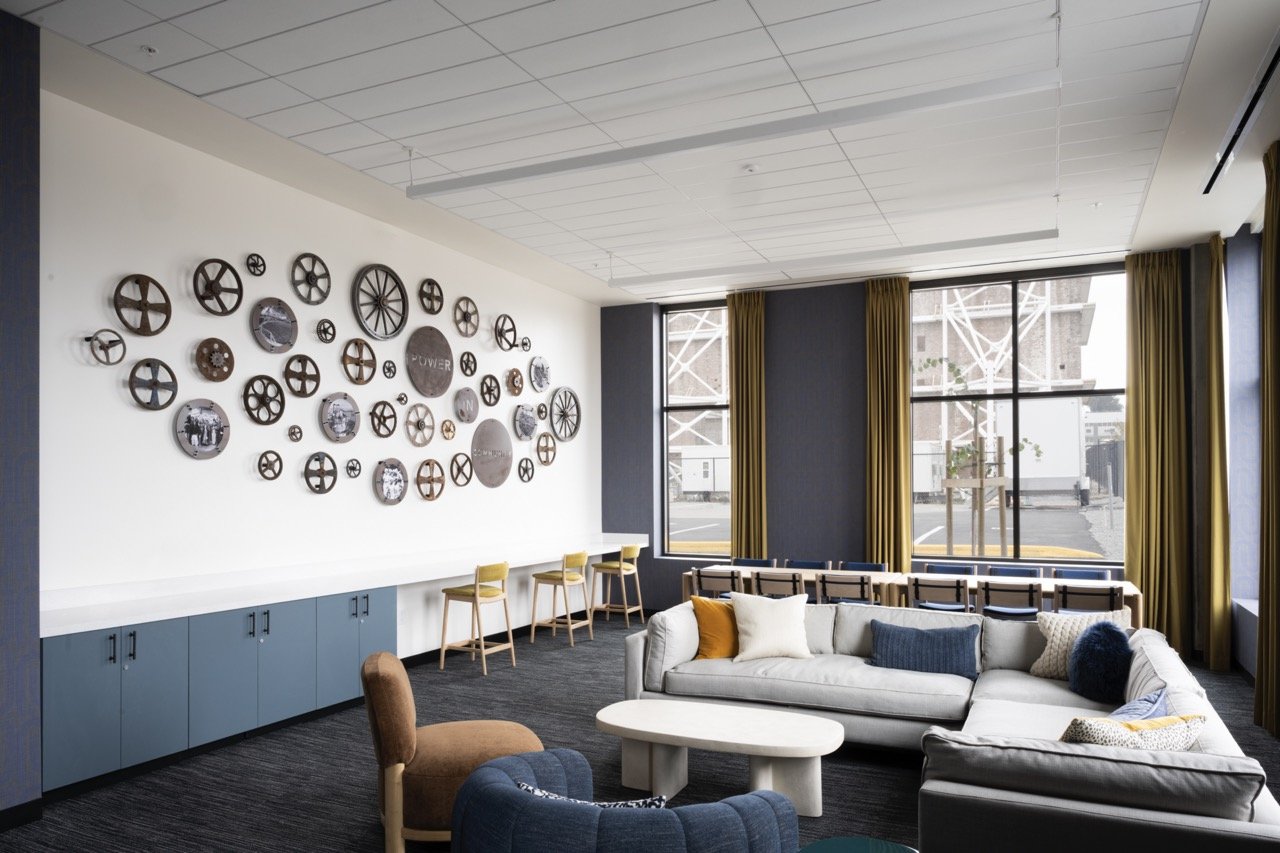
Image Credit: Kerim Harmanci
By arranging these industrial remnants in a constellation across the wall, Power in Community calls attention to collective effort as a source of strength. It honors the labor that often goes unnoticed and reminds residents that their futures — like the city itself — are powered by people, together.
Power in Community is a site-specific tribute to the people who built San Francisco — and to the workers who once powered this very place. Composed of found objects sourced directly from the decommissioned power plant site, alongside wood and metal replicas, the installation preserves the industrial DNA of the building and reactivates its history. Worn wheels, gears, and pulleys become visual anchors for storytelling: each object evokes the hands and trades that shaped the city from the ground up.
Embedded within several of the circular forms are archival photographs of generations of laborers — electricians, welders, engineers, and operators whose skilled work kept the lights on and the infrastructure moving. These images transform machinery into memory, connecting the building’s past purpose to its present role as workforce housing. The installation underscores a deeply place-based identity: this is a home for today’s workers, built on the legacy of those who came before.
Stacked Earth
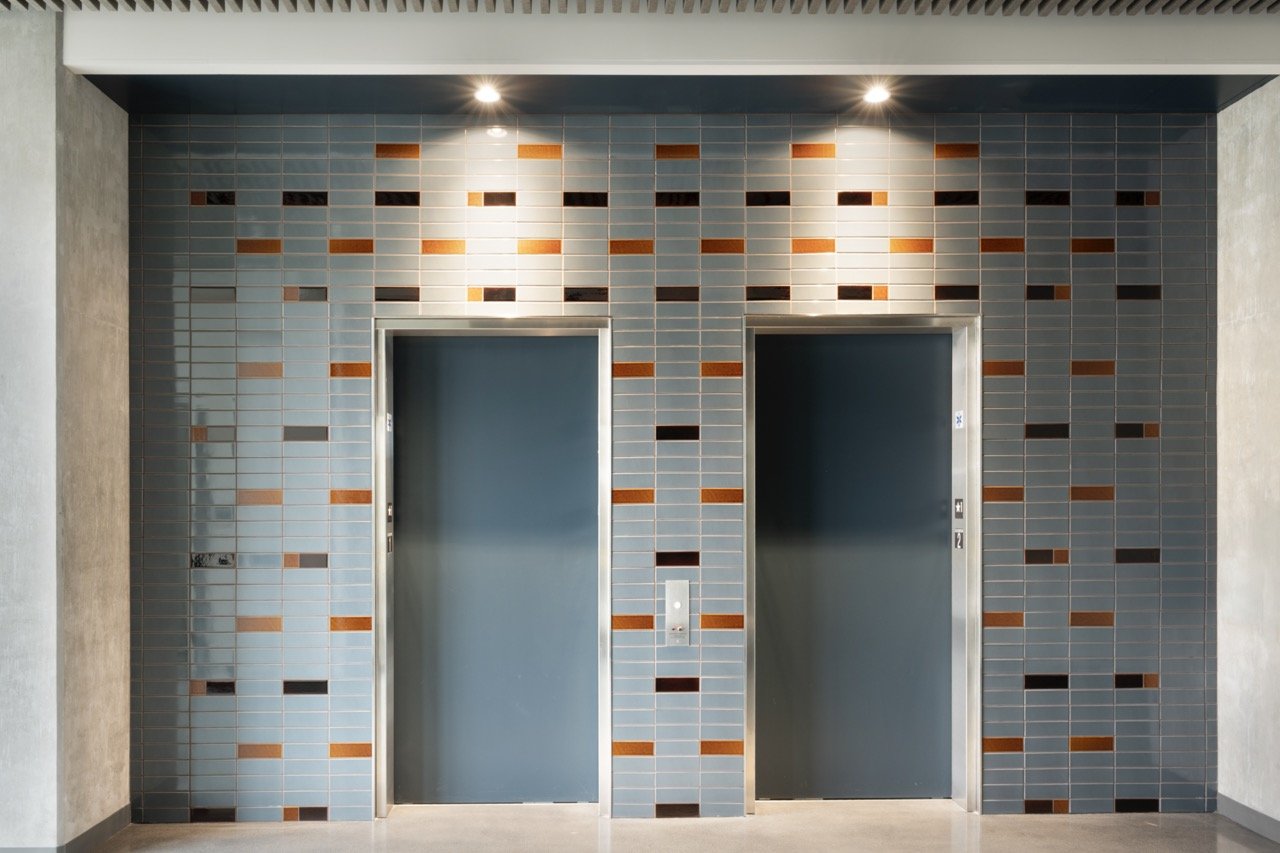
Image Credit: Kerim Harmanci
Stacked Earth is a minimal and timeless reflection on the land beneath our feet — and the many histories it holds. Through a precise geometric arrangement of espresso and amber tiles, the work honors the ancestral Bay and the movement of water that once defined this shoreline. Long before the rise of industry, this site existed in the tides; over time, it was filled, shaped, and reshaped by human hands. The artwork acknowledges that transformation without erasure.
The layered hues serve as a material palimpsest — a record of earth accumulated over generations of occupation, extraction, and construction. Each stratum speaks to a different era: from the natural sediments that formed the Bay to the industrial infill that pushed the land outward, extending the city atop its watery origins.
In Stacked Earth, these histories compress into a simple vertical gesture, grounding the space while inviting contemplation of what lies buried below.
As the surrounding neighborhood continues to evolve through another major wave of development, Stacked Earth insists that the texture of the past remains visible. It is a reminder that place is never static — that every foundation rests on stories layered deep, and that even the most built environments still hold the memory of water.
The Story of Sophie Maxwell
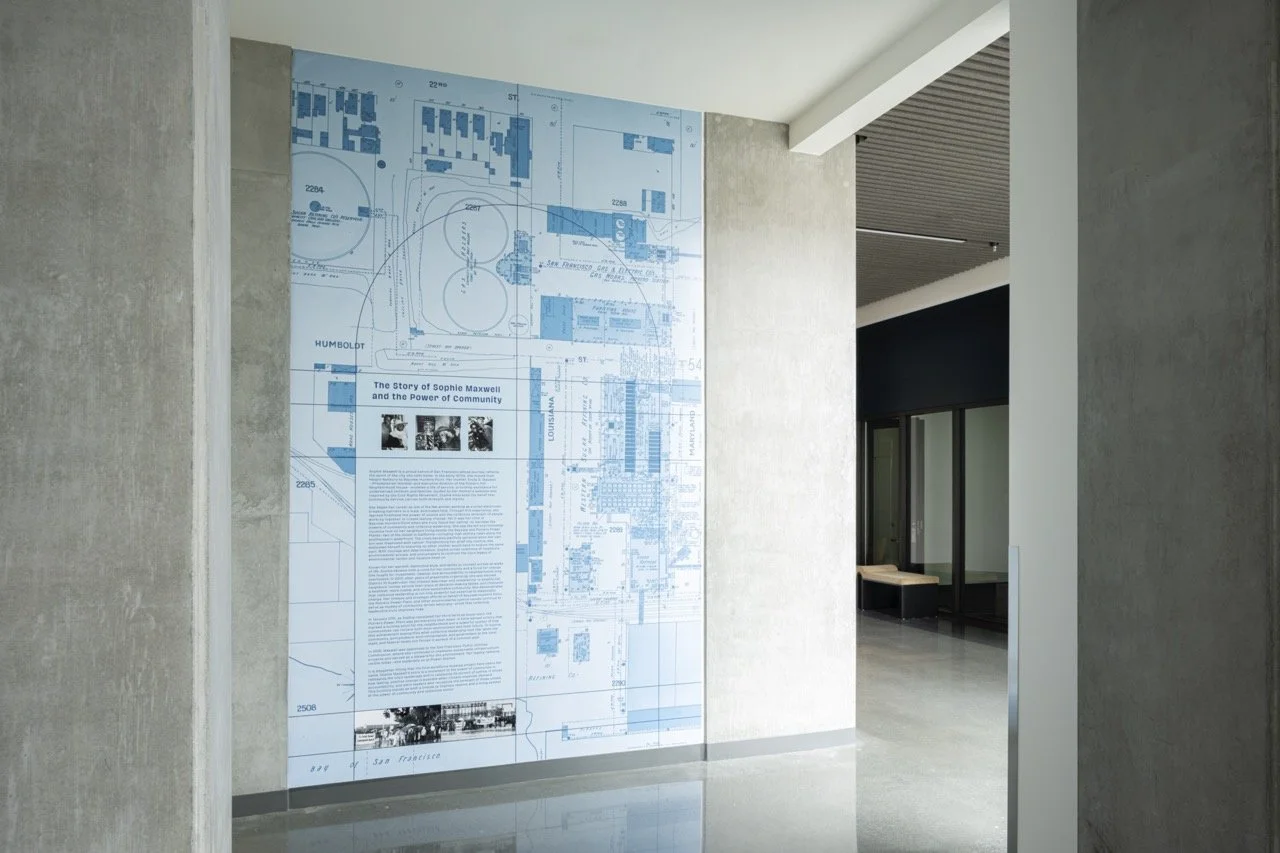
Image Credit: Kerim Harmanci
The Story of Sophie Maxwell is a graphic mural designed to honor a leader whose advocacy transformed this site and the community surrounding it. Drawing from extensive site research, the artwork centers the history embedded in this land by incorporating a 1908 SANBORN Fire Insurance map — a document revealing the site’s early life as a sugar refinery long before it became a power plant. This historic mapping becomes both backdrop and evidence: a reminder that the ground has always been shaped by industry and reinvention.
To balance the composition and bring softness to the geometry of the map, an arch is introduced — a simple yet significant form that suggests gateways, honor, and uplift. It frames Sophie Maxwell’s story with dignity and clarity.
The written tribute, developed collaboratively by the Associate Capital team and Sophie Maxwell herself, reflects her lifelong commitment to environmental justice and community stewardship. Photographic imagery highlights the critical work that took place here under her leadership as San Francisco’s District 10 Supervisor — including the decommissioning of the power plant and the reclamation of the land for the people who call this neighborhood home.
The Story of Sophie Maxwell places her legacy — and the site’s evolving narrative — proudly in full view.
Meet The Artist
Cheyenne Concepcion is a Filipino American artist creating conceptually rigorous, craft-inspired, and collaboration-fueled sculptures, installations, functional furniture, and public art that tell stories about place. Weaving together methodologies of historical research, urbanism and architecture, personal and cultural memory, and spatial design, she explores the layered connections that shape the built environment.
At The Sophie Maxwell Building, Concepcion’s work shines a light on the rich, layered history of the Power Station site — from its origins in the Bay to its legacy of industry and labor. By centering both narrative and physical elements drawn directly from the site, her work acknowledges the past without erasure, ensuring the site’s legacy of environmental justice and community power remain visible, valued, and alive.